
Start with a circuit, not an ocean
The Pacific is too large to be a useful single itinerary. A journey to the Galápagos has different transport, entry and wildlife rules from a visit to Rapa Nui, and neither should be combined casually with an imagined stop at a restricted atoll. Choose a specific island group and ask which habitats the available route actually reaches. An attractive species list can conceal the fact that its birds occur on different islands, at different elevations or inside areas where public access is limited.
Isolation can encourage distinctive forms to evolve, but it also leaves small populations exposed to introduced predators, disease and habitat change. The practical consequence is straightforward: a rare bird's limited range is a reason to be more cautious, not a reason to push harder for a view. Clean equipment before travel, follow inter-island biosecurity checks, and avoid bringing food or plant material into places where it is prohibited. These controls protect the ecological separation that makes the birds interesting in the first place.
Galápagos: the route determines the birds
In the Galápagos, decide whether a land-based stay or a licensed expedition itinerary better matches your interests. A base on a populated island can support rewarding day trips and highland walks, but it does not provide automatic access to every wildlife site. Boat itineraries also differ. Ask for the actual authorized route rather than relying on a general brochure list, and check current requirements with the Galápagos National Park Directorate and your operator before booking international connections.
Española is closely associated with breeding waved albatrosses, broadly during the part of the year from April into December, though arrival, nesting and departure vary. These birds spend time at sea, and a visit outside the breeding period is a very different proposition. Flightless cormorants are associated with the western islands, especially Isabela and Fernandina, so a route without western sites should not imply a reasonable chance of seeing them. Endemic finches add another layer: habitat and careful identification matter more than a hurried count.
Wildlife can appear unusually approachable here, but habituation is not permission to close the gap. Follow the park's current minimum-distance rules and the guide's instructions, give moving animals a clear route, and step back if a bird approaches you. Do not obstruct a landing area or a path between nesting ground and sea. Strong sun, exposed lava and small-boat transfers deserve the same attention as optics. Carry water and use secure dry storage without bringing unnecessary baggage into a sensitive landing site.
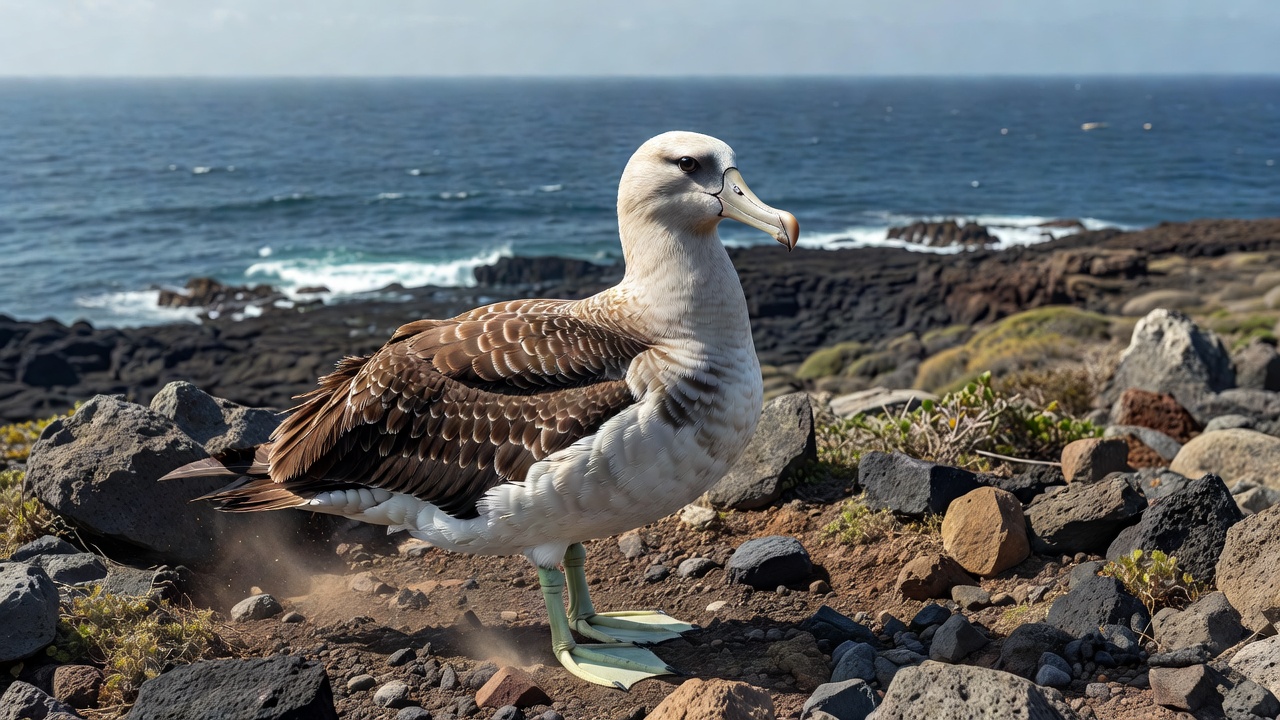
Rapa Nui: read the coast with local knowledge
Rapa Nui combines an inhabited cultural landscape with exposed oceanic shores. Seabirds may be observed from suitable coastal viewpoints or through locally arranged outings, but nearby offshore rocks and islets should never be treated as freely accessible birdwatching platforms. Ask about sea conditions, protected areas and the rules governing the places you intend to visit. Cultural protocols and archaeological protection are integral to the journey. Birding does not create an exemption from the requirements that apply to other visitors.
Choose a guide who can explain both habitat and access. A distant seabird seen in wind may remain unidentified, and that is an acceptable outcome. Long-lens photography, patient observation and careful notes are better responses than moving closer over unsafe ground. For many visitors, the island's broad ocean setting and the relationship between people, land and birds will be more meaningful than a large species total. Leave time for that perspective rather than filling every daylight hour with a target.
Midway: understand the boundary
Midway Atoll supports important Laysan albatross and black-footed albatross breeding colonies, but ecological importance does not make it an ordinary tourism destination. Do not build a personal itinerary around assumed public access. Consult the U.S. Fish and Wildlife Service's Midway Atoll information for current policy; refuge operations and conservation needs take priority. Historic visitor accounts and old trip reports are not evidence that the same opportunities exist now.
Where access is unavailable, choose a lawful alternative rather than searching for an informal route in. Even on accessible Pacific islands, inspect accommodation and transport claims carefully and ask how an operator handles itinerary substitutions. There is no single best Pacific month: match the species, site and breeding stage first, then assess comfort, cost and connections. A well-chosen circuit is one whose ordinary birds, geology and conservation story remain worthwhile if the hoped-for encounter never occurs.